The seventh Joint Committee Meeting under the India–Japan Comprehensive Economic Partnership Agreement (CEPA) was held in Tokyo on 2 March 2026, marking another important step in strengthening economic cooperation between the two countries. The meeting was co-chaired by Commerce Secretary Rajesh Agrawal of the Government of India and the Senior Deputy Minister from Japan’s Ministry of Foreign Affairs.
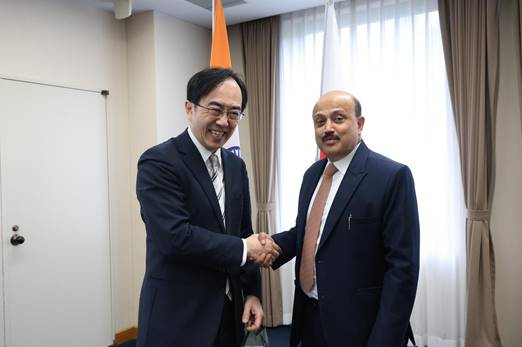
The discussions focused on reviewing the implementation of the India–Japan CEPA and exploring avenues to deepen bilateral economic engagement. Officials from both sides assessed progress under the agreement and discussed ways to enhance trade, investment flows and industrial cooperation between the two economies.
The meeting reflected the continued commitment of India and Japan to strengthening their economic partnership, which has been expanding steadily across sectors such as manufacturing, infrastructure, technology and services.
During his visit to Japan, Commerce Secretary Rajesh Agrawal also held a bilateral meeting with the Vice Minister of Japan’s Ministry of Economy, Trade and Industry. The discussion covered a broad range of economic and trade related issues including bilateral trade expansion, improving the business environment and preparations for the upcoming 14th Ministerial Conference of the World Trade Organization.
During the interaction, Agrawal highlighted the shared economic vision outlined by the leaders of India and Japan during their Annual Summit held in August 2025. He emphasized that both countries are committed to further expanding trade and investment relations and strengthening supply chain cooperation.
He noted that the economic partnership between India and Japan is supported by strong complementarities between the two economies. Japan possesses advanced technological capabilities, capital resources and expertise in high end manufacturing. India offers a large consumer market, a skilled workforce and one of the fastest growing major economies in the world. According to Agrawal, leveraging these strengths will help both countries unlock new opportunities for economic collaboration.
The Commerce Secretary also stressed the importance of utilizing the full potential of the CEPA framework, particularly provisions related to the movement of natural persons which facilitate professional mobility and business collaboration between the two nations.
Highlighting trade opportunities, Agrawal pointed out that Indian exports to Japan have significant growth potential in sectors such as textiles, pharmaceuticals, agriculture and services. Expanding market access in these sectors could contribute to strengthening bilateral trade and creating new economic opportunities.
He also emphasized the importance of achieving a more balanced trade relationship between the two countries. A balanced and sustainable trade partnership, he noted, would support long term economic cooperation and mutual growth.
As part of his engagements in Tokyo, the Commerce Secretary interacted with representatives of leading Japanese companies during a roundtable meeting with industry leaders. The session provided an opportunity for Japanese businesses to share their perspectives on investment opportunities in India and discuss possible areas of collaboration.
In the evening, the Embassy of India in Japan organized a Trade and Investment Roadshow in collaboration with the Confederation of Indian Industry and Japan’s prominent business federation Keidanren. The roadshow aimed to promote trade from India and encourage greater investment from Japanese companies in key sectors of the Indian economy.
During the event, Agrawal highlighted India’s evolving policy landscape designed to support global trade and investment. He outlined various initiatives undertaken by the government to improve the ease of doing business, streamline regulatory procedures and create a more transparent and investor friendly environment.
He also underlined that the Comprehensive Economic Partnership Agreement provides a stable institutional framework that ensures tariff certainty and regulatory predictability for businesses operating between the two countries. This framework, he said, helps create an enabling environment for deeper economic collaboration.
Officials noted that India and Japan continue to play an important role as trusted partners in global value chains and supply networks. Strengthening economic cooperation under CEPA is expected to further enhance industrial partnerships, support resilient supply chains and expand bilateral trade opportunities.